
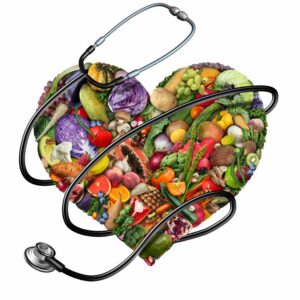
 The American Heart Association defines food is medicine as the provision of healthy food such as produce prescriptions, medically tailored groceries and medically tailored meals to treat, manage or prevent diet-related health conditions. We know that inner cities and rural communities often have poor access to stores or farmers markets, further complicating good food access when there is a health issue. In these circumstances we look to many community based organizations to fill those gaps.
Recently the increase in prices on all household goods has put a great deal of pressure on families and the elderly to adjust spending and for many that means cutting food expenses. USDA notes 14% of all households in the NYS as being food insecure. https://www.ers.usda.gov/topics/food-nutrition-assistance/food-security-in-the-us/interactive-charts-and-highlights
Our local library in Old Forge in the Adirondacks has a wall of food shelves at the entrance. Always open, it’s used anonymously by residents in need. Food pantries in churches and food banks also report seeing steady increases in demand. My concern is those individuals who are isolated or not connected to resources.
 In doing research I had the opportunity to talk with Rachel Sherrow, Chief Operating Officer of Citymeals on Wheels. Citymeals located in NYC, serves over 22,000 residents each month. My interest was to understand new ways for people to access help, especially with frail elders. In addition I wanted to understand how “Food as Medicine,” projects were connecting with clinicians. Rachael shared,
“Questions about food insecurity and access to fresh produce should be a standard part of a physician’s intake with patients. The HFIAS (Household Food Insecurity Access Scale) can open avenues for referrals and resources for those who need better nutrition or accessibility and can be part of the solution to better health outcomes for so many, especially our most vulnerable populations.”
Citymeals has developed unique monthly boxes of supplies to allow additional meal access besides a home delivered traditional meal. They have found ways to close food gaps based on individual needs.
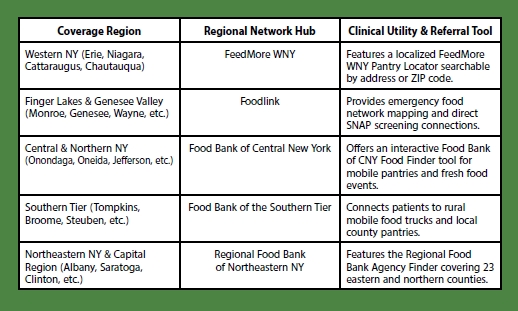
For office practices consider two simple food related questions on intake forms as a way to assess any food issues. Follow up linking a patient with 211NY.org or area churches, food banks and meal programs helps bridge an initial response to connecting a patient in need to resources.
Across Upstate NY there are resources unique to each community, but all share common missions to make food accessible to those in need. Consider how assessing this issue fits within your practice.